




-
Your friend might want to consider using the door during drying. Get the oven up to temperature and insert the door to hold the heat - it will help drive out moisture in the insulation. When I started using my door during driving the sustained heat was the key to drying out the CF board under my floor. -
Well I picked up the door this afternoon, it did not cost quite as much as quoted because they did not polish the metal, I did not see any point in that!
I think it looks great and fits well with a 2mm clearance, my friend is still drying his oven so we will have to wait a bit to see how welll it works.Leave a comment:
-
I have been able to find scrap SS (not necessarily 316) from old BBQs or old SS appliance doors or restaurant equipment. So it is out there, relatively cheap. Only big issue is you really need a TIG to weld properly.Leave a comment:
-
David, I agree that aluminum has poor thermal resistance but it is easy to work with. My door performs pretty good and considering the forno door is 1/4 inch steel plate, it's all good :-)
Leave a comment:
-
I can get a type of LECA where I live, it was used in the construction of lightweight concrete blocks but, the blocks are no longer available nowadays.
However I can still get the base product, it is a smaller grain size that the LECA you get in a garden centre & very hard. I think it will make a strong lightweight door, I will give it a go and we will see how it turns out.
As I have just built an oven for a friend & he is happy to invest in a ss door, so I given the 'go a head' for one to be made, should be ready by Friday....Leave a comment:
-
Looking at aluminium’’s thermal conductivity you will see it is extremely high. While it is easy to work, the heat will jump straight to it making it very hot to handle and increasing heat loss from the oven. The thicker the aluminium the greater the heat sink. SS is way less conductive but still around 100 times more conductive than wood and unfortunately buckles a lot with heat. This can partly be overcome by making it thicker, but then you are increasing cost, weight and adding the heat sink effect. AAC (Hebel) is another solution that works for a while, but remember that it’s made from conventional cement that the heat will eventually kill if it’s rather weak and abrasion vulnerability doesn’’t get it first.Originally posted by UtahBeehiver View Post
My solution is to use a 19 mm wooden door (good insulator and I like it’s look) with an insulating panelI 25 mm thick cast from dense castable mixed with perlite. The problem is that to make it sufficiently insulative you reduce its strength. To counter this I add plenty of AR random glass fibres to the mix to increase strength without increase in density. Even then the door can only be used for temperatures below 300 C. It seems to work ok, who wants to bake or roast higher than that anyhow. One big advantage is that the door is quite light and can be operated one handed.Last edited by david s; 03-07-2018, 01:43 AM.Leave a comment:
-
Thanks guys, some good options there.
i made my first door by cutting out a front and back from 2mm alloy secured together with two 4” bolts. I then filled it with expanding high temp foam, quickly covered it in cling film and shoved it in place. The expanding foam really made the door a nice tight fit and worked really well but only lasted one summer before the foam blackened and deteriorated.
Mild steel would be a much cheaper option, I will get a price for that but I have an idea about moulding one from baked clay and refractory cement that I just have to try...Leave a comment:
-
Here is a list of thermal conductivity values for some common materials (aka K value) Al - 205, Carbon steel 43, SS 16, oak 0.17. So it depends on what the purpose of the door is and what temperature it will ultimately be exposed to. David S of Australia did cast some doors with refractory cement and he has a post somewhere but I recalled they eventually failed. David is also proponent of wood doors at lower temps. Also here is the link to K values of other materials.
Leave a comment:
-
Fox, check out my door at the link below. It's mild steel, not stainless, but if you ask your fabricators to do something similar using a series of tacks or stitch welds like I did, there should be minimum distortion. Show them the pics and I'll bet you will get a much lower quote. If you are going for something more like a work of art, you are probably going to need to get out the walletOriginally posted by fox View Post
https://community.fornobravo.com/for...442#post393442Leave a comment:
-
There are some ovens built with the vent in the fire chamber, but most ovens built on this site (other than having more of a dome shape) look like the one in the illustration above. There is a fire chamber, an inner arch which is the entry to the fire chamber, then a vent area with the chimney. Most doors fit against the inner arch, sealing off the heat from escaping up the chimney or out the front after firing. This is why a well built oven with a well fitting door will retain heat for several days, allowing multiple batches of food to be cooked, after a good firing.Leave a comment:
-
Hi Les,
Aluminium is a good idea too, simpler to work with rivits then welding so i will consider this option too.
Thanks for the info re door position I guessed is purpose is so to seal the chamber but, confused when looking at these pictures and conflicting information i am coming across:
Vent inside the door examples (few among many)

Vent out side the door examples (this seems to be less common)
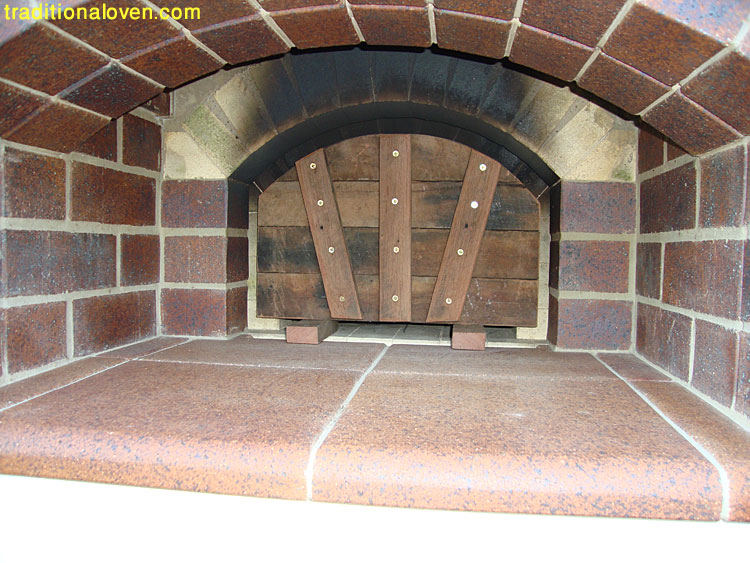

instructions in this document (http://pinkbird.org/images/b/b9/Pompeii_oven_plans.pdf ... fornobravo guide pg 14) and the above diagram say that the vent should be outside the door. Therefore very much confused and wish some guidance.
Regards
SimonLeave a comment:
-
Fox, I made my door from aluminum and filled it with vermiculite. It's about two inches thick. Works pretty well.
Simon, You want the door to seal off the chamber for retaining heat.Leave a comment:
-
while speaking about the door, i will be doing 2 sheet metal filled in with rock wool 2 inch door. my question is this maybe you can help. should i be fixing the door on the outside of the tunnel or at the end of the tunnel? should th event be closed in or not?
thanks.Leave a comment:
-
I have had a couple of quotes for a 1.5mm ss sheet door filed with insulation but they are really expensive! One quote was £500 the other was £425.
The fabricators seem to think this is a tricky thing to weld up as this ss distorts when the welding takes place & due to the accuracy required would take some time to complete.
I am going to have a go at building a high temperature cement & perlite door, perhaps adding some 50mm glass fibres into the mix.
I will build a mould & see what happens ......Leave a comment:




Leave a comment: