
Re: Fire Brick Storage
I had the chance to get some old kiln bricks for my oven. Based on Chip's experience/advice and the condition of the bricks, I decided to pass. I'm happy I went with new brick. In the total cost picture of putting one of these ovens in - I figured new brick was pretty cheap insurance
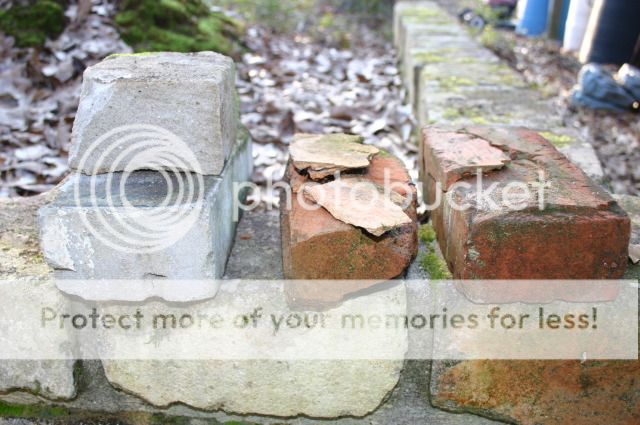
For reference, here are some pictures of the bricks I was considering





-
Re: Fire Brick Storage
Sorry to jump in here,the but in searching, this topic seems a close fit to my question. I have access to free kiln oven brick and was considering building the dome with them, but purchasing new for the oven floor. I can post pictures of what I have if that helps, but I was curious if I could use these or not? Thanks all!Leave a comment:
-
Re: Fire Brick Storage
David,Originally posted by Dino69 View Post
Those free bricks for the first build were a very time expensive option. But I was able to build the second dome much faster because of experience and home brew mortar. Thanks for your words of praise regarding my design. Next summer it will be completed so you will be able to see the final design.
ChipLast edited by mrchipster; 02-07-2012, 10:39 PM.Leave a comment:
-
Re: Fire Brick Storage
Yes, that is spalling on those brick. Those are dry pressed commons from the turn of the century or soon after. The reason they are used for fill, especially the red/pink ones, is that they are soft and porous. They are called "salmons" and are a by product of the old style kilns. They are, in fact, the brick that did not get fired as thoroughly as they should have. They were used to either build the next kiln (actually a clamp), or used as the interior wythes and as fill brick.Leave a comment:
-
Re: Fire Brick Storage
Chip,
Sorry to see your first build end that way. But Lord knows your present build is freakin' awesome. Your pics kind of pushed me into my choice. Thanks for sharing them. I ended up saying better safe than sorry.
I also saw your heat retention on your build thread. Man, I hope I can achieve that kind of performance from my oven. Impressive to say the least.
David
And you were skiing in Park City at the end of December. Some guys have all the fun.Leave a comment:
-
Re: Fire Brick Storage
Gulf,
No problems. I am just happy to see everyone talking about it on here and having a few others say they thought the same at some point. Hopefully that is proof I am not totally crazy. It's all good.
Thanks to all who answered. I appreciate it. If it is helping me, which it is, to have some of my beginner questions answered then I will be able to pass on whatever I learn to another in the future.
The middle priced brick is right by me, barely any driving, and they keep them covered. (Superior Clay) I will probably go there. Plus I just found out they are open on Saturdays so I do not even have to miss work.
DavidLeave a comment:
-
Re: Fire Brick Storage
My bricks looked almost identical to the white ones on the left. Probably the same type of brick. They were in about the same condition, with some mortar attached and chips out here and there. Some of the bricks when cut would crack at odd angles and I threw those out. But I fear that there may have been other internal flaws.
ChipLeave a comment:
-
Re: Fire Brick Storage
T,
I am a very close to being a "1 percenter" so, I guess it is fitting that my oven is built out of ".1 percenters"
Here is a wire cut firebrick.

Chip,
The bricks on the left are what I acquired out of a (two story, four fireplace, single chimney) build which was constructed around from the turn of the century up to about the 1920s. The fireplaces were actually built for coal instead of wood. They were very small and still had the coal grates in place. Wish that I had of hung on to them! These bricks were used as what I call as a backer brick to the true fire brick lining the fire boxes. The freshly broken brick is wet from the recent rains. It would appear a little lighter and a lot chalkier if it were dry. The bricks on the right are what I call "spalding". In this case damaged from freeze/thaw not fire damage. They have been setting under the hill, in the elements for 28 years. I have several hundred brick still left which have all been exposed to the same conditions. Most show no signs of damage.
David,
Sorry about hijacking your thread. But what I really meant by chiming in was to advise you about choosing the cheapest brick. If I had of chosen the higher priced brick, I would have probably saved money and a lot of time in the long run. My advice to any one who had a price range as varied as yours would be to buy one brick at the first two places I stopped at, take them to the third, and set them side buy side. Make note of the dimensions as well as the quality.Leave a comment:
-
Re: Fire Brick Storage
99.9 percent of refractory firebrick are dry pressed. I have never actually seen a wire cut fire brick for that matter. This is done for several reasons, the primary one being consistent sizing, as the standard for mortar joints in refractory applications is less than 1/8".Leave a comment:
-
Re: Fire Brick Storage
David,
Going back to your post. I had two different price ranges of brick available to me when I began my oven. The cheaper was $1.45 each and the other was $1.85. The $1.45 was wire cut. Some curved, some straight, most all of them had a little roll where the wire exits. Due to price consciderations and since the dome cuts were to be 1/2 brick or less I chose the cheaper. I chose the higher price brick for the floor though. There was a consciderable difference in the quality. The higher price brick were consciderably more uniform and square.Leave a comment:
-
Re: Fire Brick Storage
I'm sorry about the comparison in weight to modern day insulated brick. The brick that I have and what I think you originally used were the insulated brick of their day.Originally posted by mrchipster View Post
Edit: I think that I can locate a brick or two under the hill which show ample signs of spalding due to freeze/thaw as Tscarborough is referring to. I'll try and get a pic after work tomorrow for future reference.Last edited by Gulf; 02-06-2012, 07:03 PM.Leave a comment:
-
Re: Fire Brick Storage
They do have about 3/4's the density (weight) of the bricks I purchased and are significantly softer than the ones I have in the oven now. They are not nearly as light as insulated fire bricks though.Originally posted by Gulf View Post
ChipLeave a comment:
-
Re: Fire Brick Storage
The reason you do not see any spalling or faces popped off is because these bricks were cut down to only use what appeared to be the good parts. I have no other explanation other than freeze thaw to explain what happened to them.Originally posted by Tscarborough View Post
I started with 700+ bricks, I only had 150 left at the end of the dome and many times only got one usable piece out of a brick due to surface imperfections (I guess you could call it spalling) or chips.
Your mileage may vary... I am just saying I would not use firebrick stored outside on another oven. It was hard enough building it the first time. but I did get better at cutting and laying the bricks for the second version.
And my oven performs very well today so I am still happy.
ChipLeave a comment:
-
Re: Fire Brick Storage
Those brick look like a brick that I have seen used down hear as a backer brick in fire places. I have a couple hundred used ones stacked under the hill right now. The ones that I have weigh just a little more than an insulated brick but not near as much as a fire brick. The only reason that I have them is that they were just a little more stronger than the 50-75 year old lime mortar in which they were originally laid.
If so, all some one would have to do is buy one firebrick that they trusted. Set them side buy side with the used brick. A couple of strikes with a trial should tell the tale.Leave a comment:
-
Re: Fire Brick Storage
I do not see any damage on those bricks indicative of freeze-thaw. Freeze-thaw damage will be spalling or even entire faces popping off, not cracking.
As a rule, brick stored outside in any weather will not suffer from the effects of freeze-thaw, even though they may be damaged by the same conditions once laid.Leave a comment:


Leave a comment: