
Re: Filling joints in hearth slab?
I would not align the floor seams with the dome seams. If it were my oven I woudl offset them so the floor seams were at the middle of the dome pieces. Same as you would with brickwork
It looks in the pictures like you should be able to push the dome sections in at the base to get them to fit together better, but maybe it just looks like that...
What brand is this oven, if I might ask?





-
Re: Filling joints in hearth slab?
Gaps on vertical seams
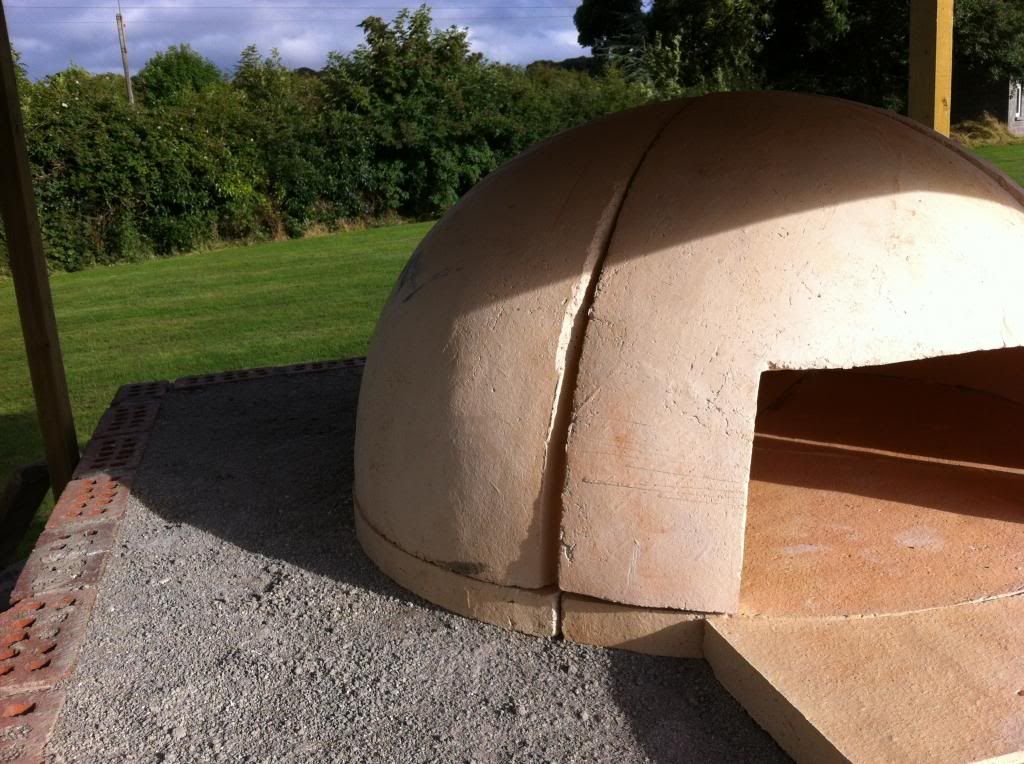
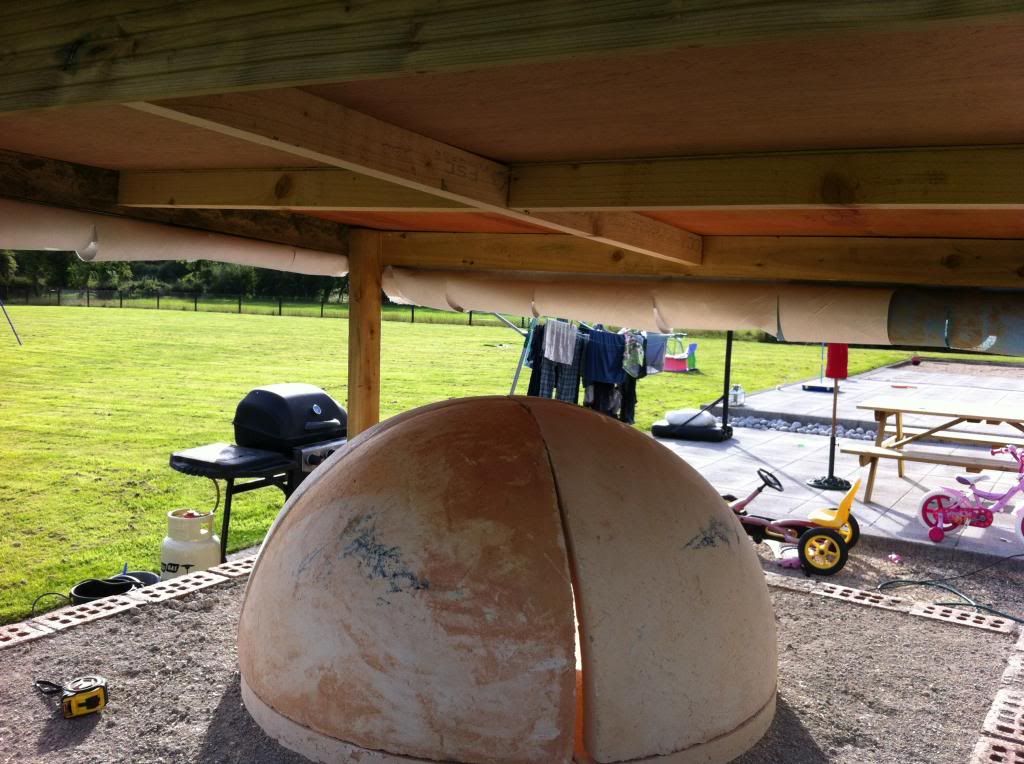
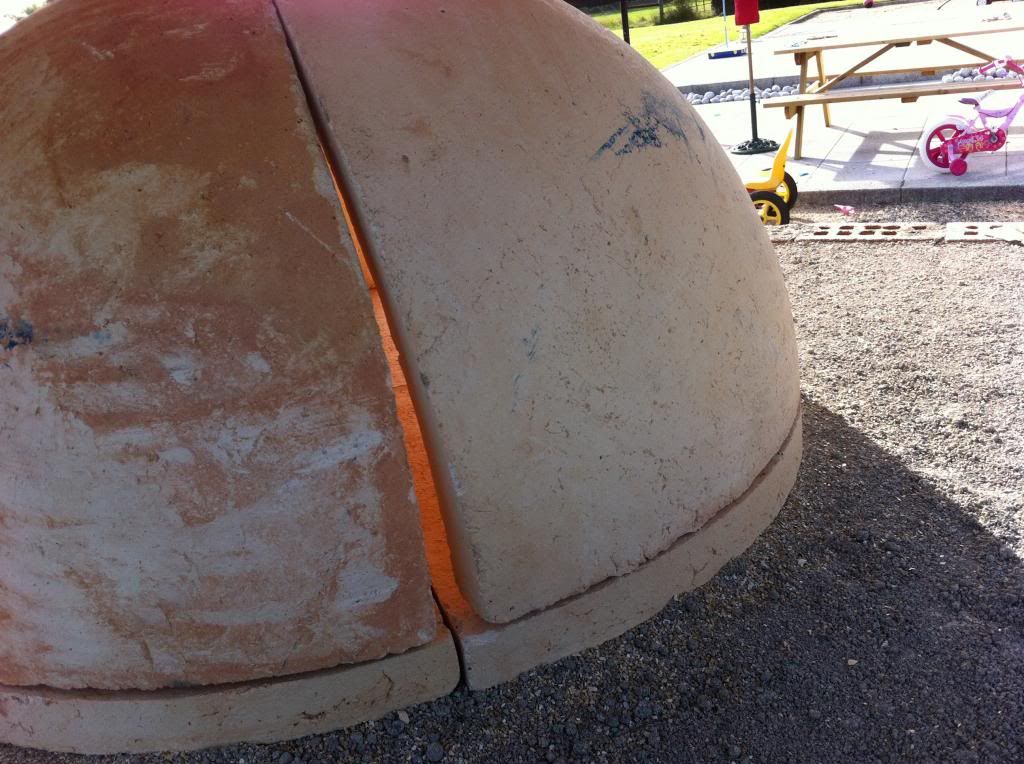
The guy in the refractories said not to worry, just fill them up with mortar. I'm wondering would it be best to order some firebricks, cut slips and mortar them into the gaps or should I just go ahead and fill them?Leave a comment:
-
Re: Filling joints in hearth slab?
So, I took some off the bottoms of the high pieces, they now fit quite well at the top but on the 4 vertical joints there's still large gaps at the bottom. Some around 30mm at the widest point.
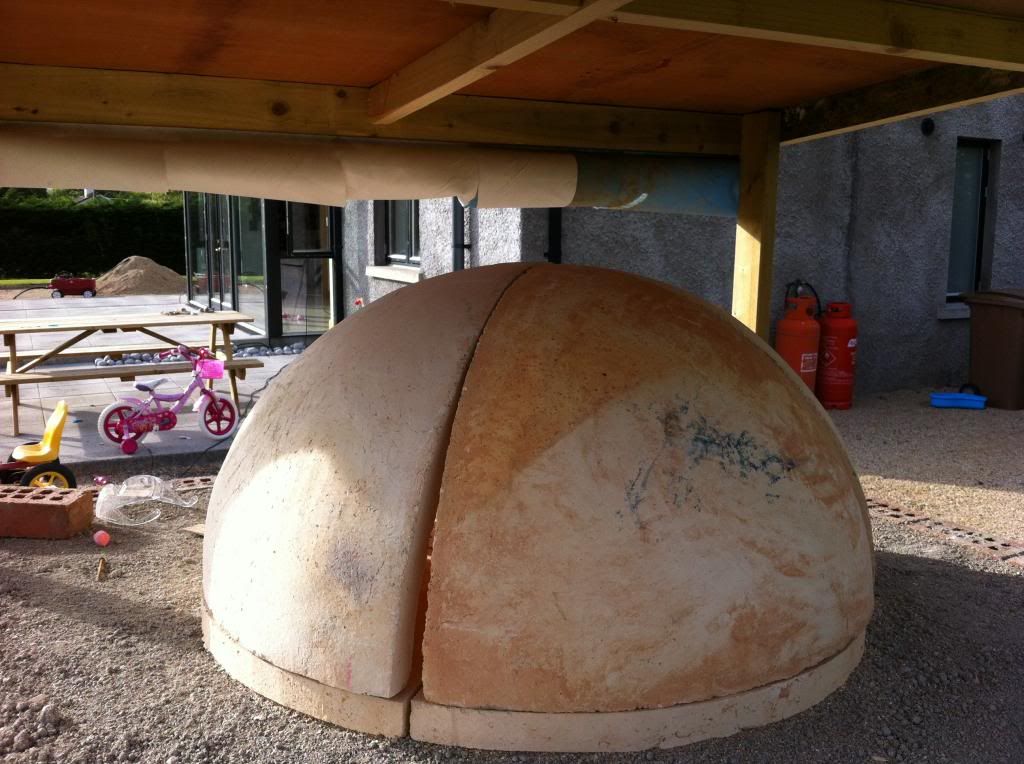
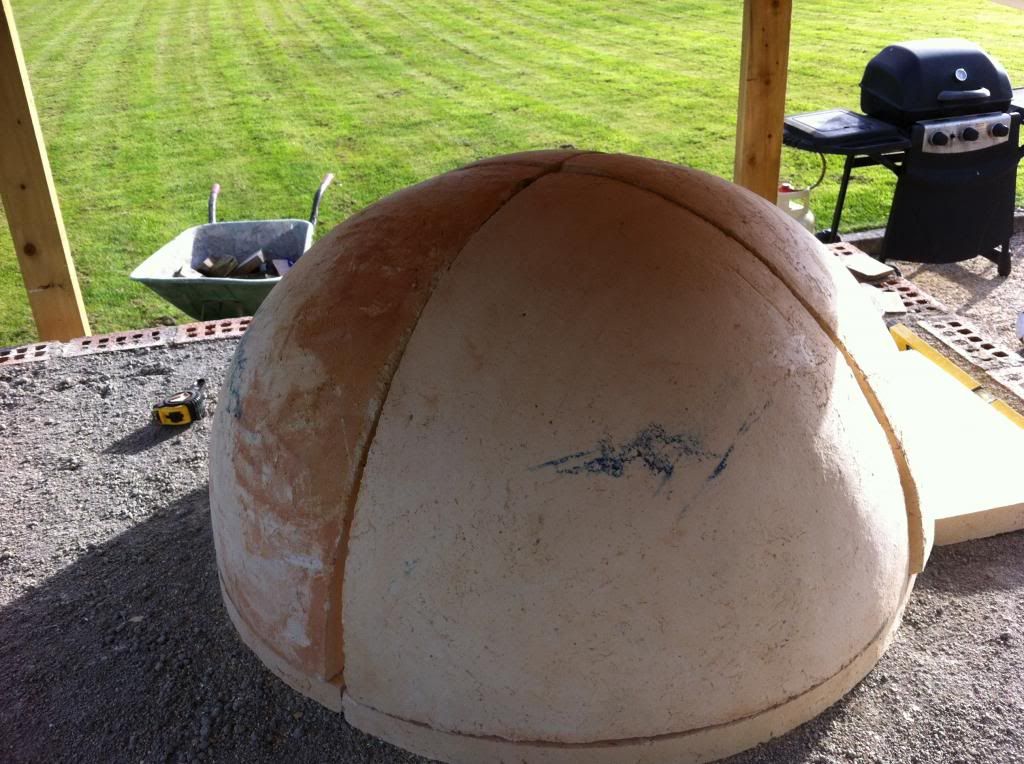
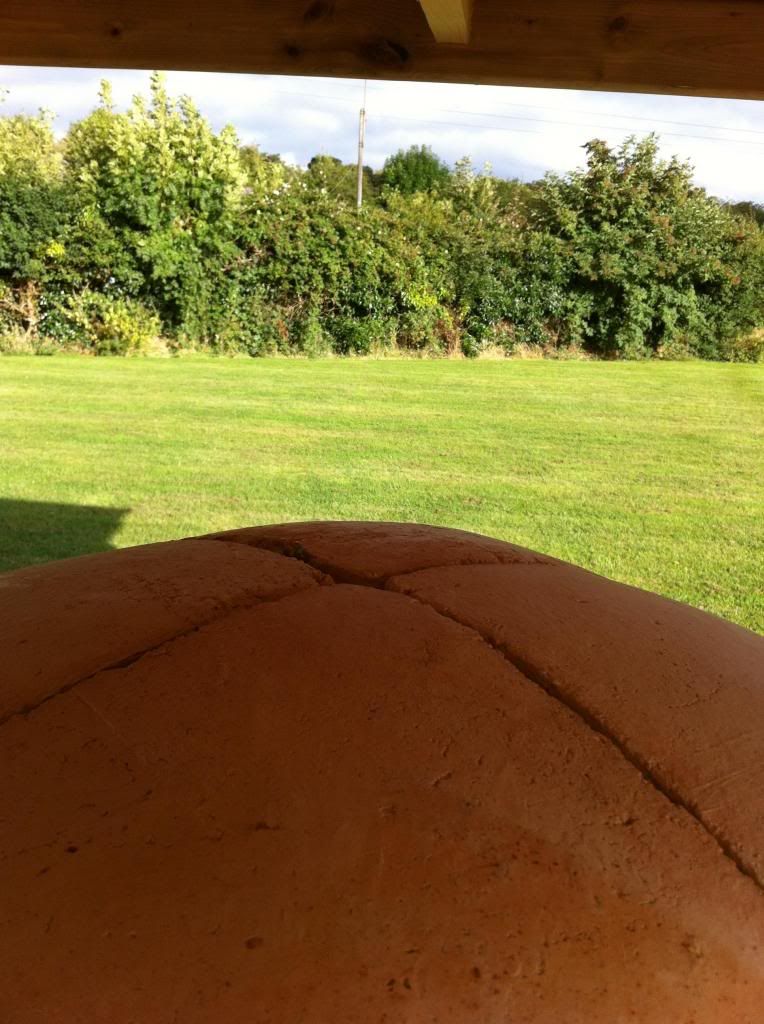
This ones taken from inside
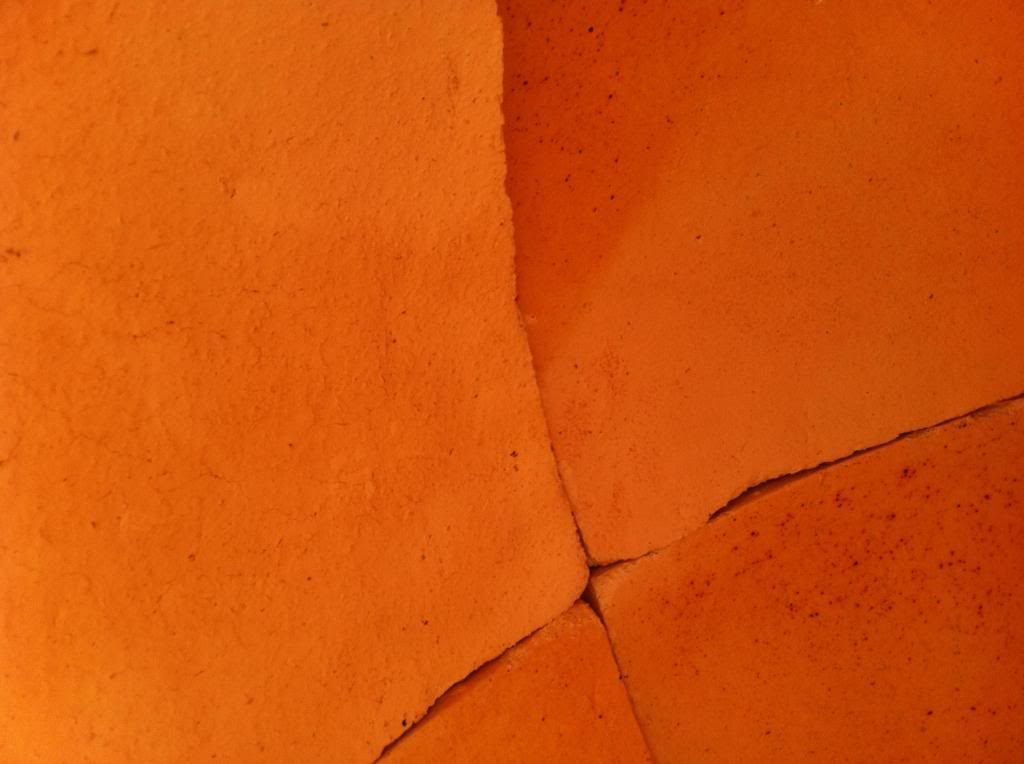
Leave a comment:
-
Re: Filling joints in hearth slab?
Just picked up diamond blade. Hope to get it done this afternoon if the kids let me!Leave a comment:
-
Re: Filling joints in hearth slab?
Don't get worried that this is some kind of big job!
It really is not! Actually, if you spend a couple of hours working at it, it will be finished and you can be on your merry way doing the next part of your oven build.
The idea of elevating the center is to force things into their design alignment. A quarter of an inch out of whack on the bottom telegraphs to huge amounts in other areas.
A good piece of advice--don't try to take too much off at one time! You can make some hardwood shims to place under the oven where it hits the floor. I would cut them from maybe zero to maybe 10mm taper. I do not think that anywhere on your base you will be more than 10 mm out of alignment.
You just have to dive into it and you will be surprised with how quickly things turn around for you.
I made matching forms for my oven- a three piece castable, and I thought they were perfect. Before actually pouring the sections, I butt up the adjoining forms and made minor adjustments--which I thought would put them into perfect alignment. Once the sections were cast and the forms removed--again I matched up the pieces. There was still some misalignment but nothing a diamond sanding wheel could not correct with a few minutes of grinding.
I am waiting to see your photos with the adjusted dome! Don't plaster it up with gunk before taking the pictures, I'd like to see how fussy you want to be with your own oven!Leave a comment:
-
Re: Filling joints in hearth slab?
Hello Richc:
Well it looks like your castings are a bit off. If they are not off by orientation, like you have a vertical joint where it should actually be a base joint... then you are going to do some serious scribing to make them fit.
To do this, you need to get your hands on something that will cut the refractory cleanly so that you can make the necessary adjustments. A small angle grinder with a diamond blade, for cutting and maybe a cup type diamond leveling cutter. Actually the same cutter that you would use for cutting brick for a hand held grinder.
How I would tackle this would to first decide which are the most critical seams. To me, I would want the center of the top of he dome to be in perfect alignment. I think that you need to use some type of hydraulic jack and some wooden blocks to protect your casting. The top wooden block should be able to touch all three pieces of your dome.
You must raise the center enough so that it becomes all the same height. In doing this, your vertical seams should come into alignment. Once that you have accomplished this, You will need to scribe the bottom of the dome sections so that you will eliminate any dome to hearth spaces.
My term scribing is just marking with something that is the thickness of the largest gap and cut that excess off all offending pieces. You should be able to do this so that --I don't know the currency of Ireland??? Maybe it is the British Pound??? Anyway, you should be able to make it tight enough that one of your paper currencies cannot easily slide between the joints.
This is something that you can do--and something that must be done to get these castings into alignment. If you don't, you are just asking for problems down the road.
You want to look inside your oven and see a nice smooth surface. Too bad the company that supplied the castings has such a poor quality control department!
Another little bit of advice--try not to set schedules when things must be completed by. With these oven builds, something always comes up --adding schedules to a hobby just makes for a lot of useless stress! Worrying never accomplishes anything except "the actual act of worrying"! Enjoy your hobby!
Another "old guy" bit of advice- if you don't love going to work at your regular job, change jobs --so that you do! You have to work all your life anyway so why not enjoy what you do!
I'm really lucky...I consider my job as my hobby, not that I have a lot of money and can be independent but because I enjoy looking forward to every moment I spend doing the little projects that I do--AND--someone else is willing to pay me for what I do! Best of both worlds!! Even though the pay is small, the rewards are great!
To get back on subject--Use the refractory mortar sparingly! Do not allow it to get onto your hearth surface or any area that would make a bond between the dome and hearth. It just fills the fine cracks, It can be plastered over the outside of the dome at the joints and feathered out. The joints will crack again there anyway but it helps to keep the cracks very small!
What is the deal with the landing? Do you have another cast section that forms the landing and chimney transition? Do you have any sales literature that shows a completed oven by this company?Leave a comment:
-
Re: Filling joints in hearth slab?
When I look at your photos I see that the tops are out of alignment as well as the sides. If you shim up the bottom of the dome pieces can you get a better match for the vertical seams?
I think if you shimmed up the bottom with firebrick shims and made your larger gap at the floor, filing that gap with your castable, first placing a piece of card stock down so as not to bond the dome to the floor. I think it might be more durable than having those large vertical seams.
It is unfortunate that the castings are so far off.
Another thought, have you played with the order of the pieces to possibly get a better fit between sections, and or is it possible that the orientation of the pieces is off, such that you have laid a side at the bottom or something?
Another question, are the floor pieces level to one another?Last edited by mrchipster; 09-01-2013, 12:25 PM.Leave a comment:
-
Re: Filling joints in hearth slab?
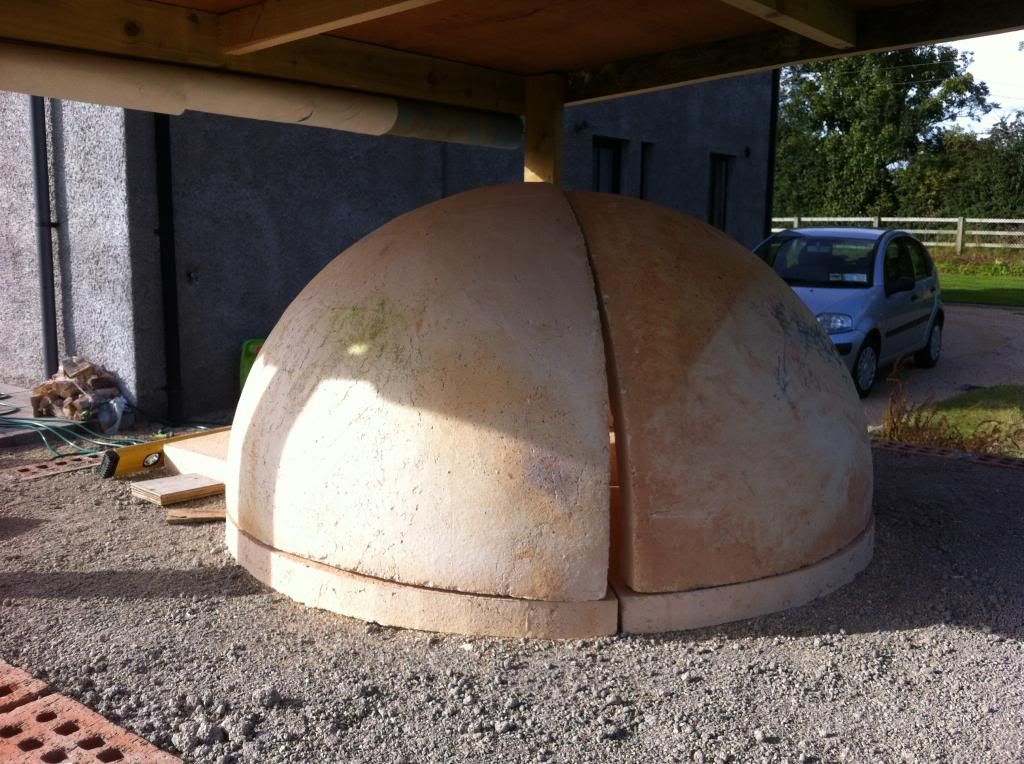
So I ended up using dry vermiculite under the hearth slabs to bed them down as they were moving due to uneven undersides when the dome pieces were placed on them. There's some very big gaps in the upper dome sections probably 30mm in places but the supplier told me to fill them with the refractory cement he gave me. They don't sit together very well, not sure how much that matters. If I trusted myself I'd probably 'reshape' them with an angle grinder but I need to get the dome insulation done in the next week or so.
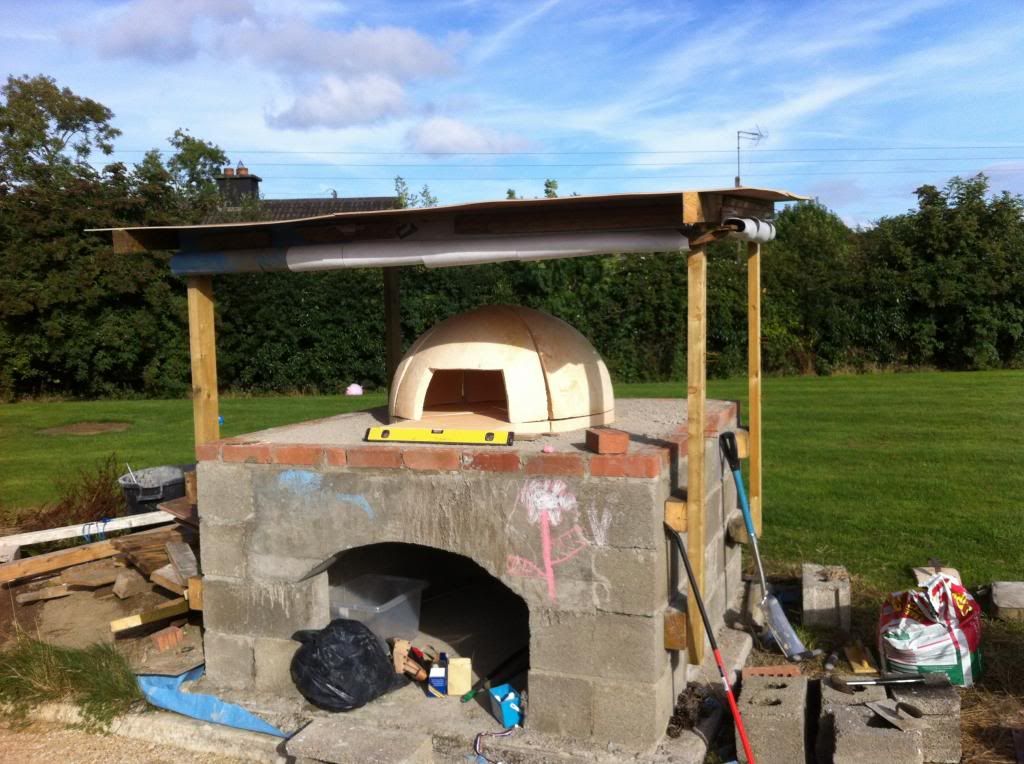
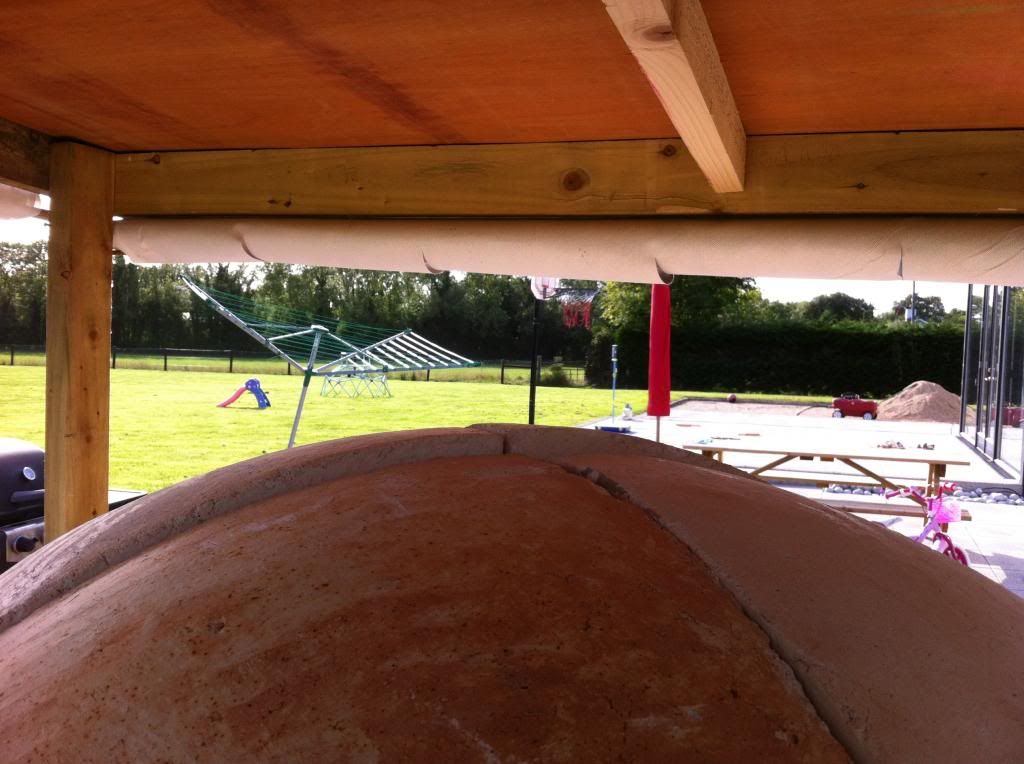
Leave a comment:
-
Re: Filling joints in hearth slab?
See--there you go! intuition is leading your way.
You are probably 100% correct!
But if you wanted to easily adjust the surface for smoothness, now is the time when there are no other obstructions to deal with. But maybe better leave well enough alone and go with your gut reaction!Leave a comment:
-
Re: Filling joints in hearth slab?
Thanks for the compliment Mikku, im tempted to just leave it and continue with the rest of the build because its sitting OK right now.Leave a comment:
-
Re: Filling joints in hearth slab?
Looks like things are going fine.
If you want to use sand or vermiculite under the hearth pieces, I'd think either would work fine.
As long as the greatest majority of the slab hearth pieces are making contact with your vericrete base, you should be fine. If you had access to a cup sanding wheel the kind with diamond imbedded in the surface, you could cut the top surface to get it really smooth. I guess even a belt sander would cut enough to get a satisfactory surface.
These pieces are your cooking surface so nothing else is placed on top of them, therefore non-load bearing. Little gaps are fine and allow for each to expand when exposed to wood burning temperatures.
I like the job you did on your vericrete base--looks pretty professional to me!
But I've only done one and it is not 100% yet--But it bakes and makes good pizza already!
Keep the pictures coming.Leave a comment:
-
Re: Filling joints in hearth slab?
Put down my hearth slab sections today. The sections arent very well manufactured and dont sit very well together. See images below, although the pics arent that good. Theres gaps of around 5mm in places. I was tempted to 'rework' the edges with an angle grinder but afraid I'd do more damage. Is it OK to leave these gaps as theyll fill with ash over time? The joining edges arent straight.
Also, the surface of the base slabs isnt very level again down to poor manufacture. I can see there will be some air gaps under the tiles in places. Also, to avoid lips where the sections butt up against each other ive packed them up slightly in some areas. I was wondering, should I put down a thin layer of sand or even a thin layer of pure vermiculite(no cement) under the slabs to avoid any air gaps between the insulation under hearth and the hearth slab?
Thanks
Richard
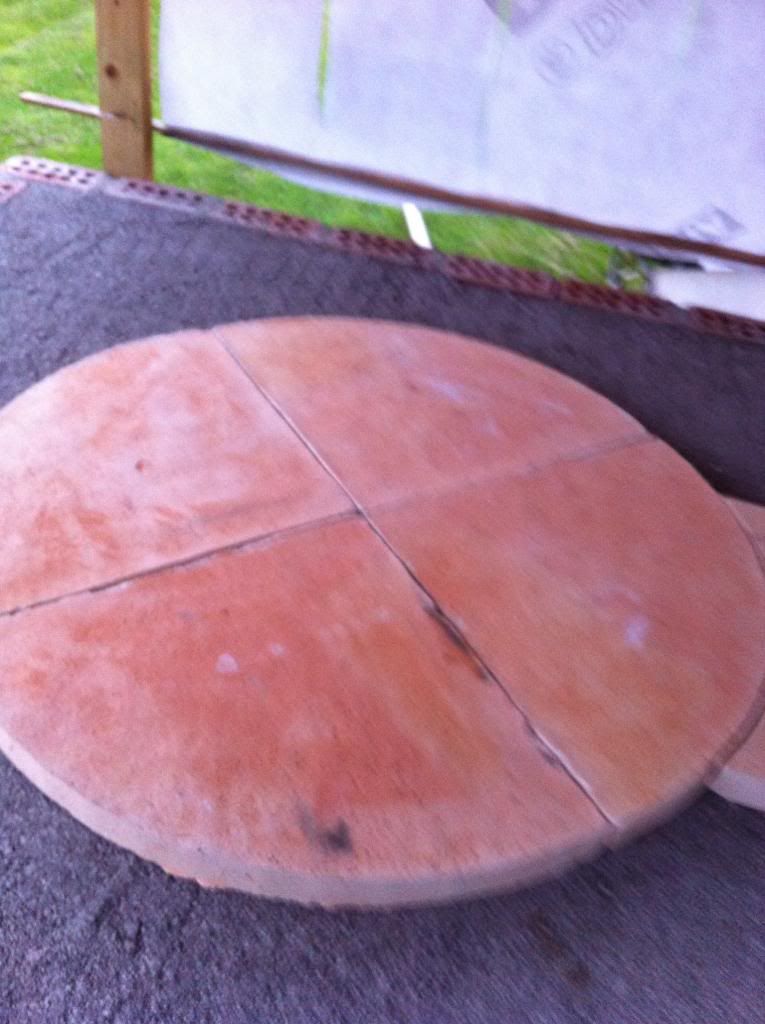
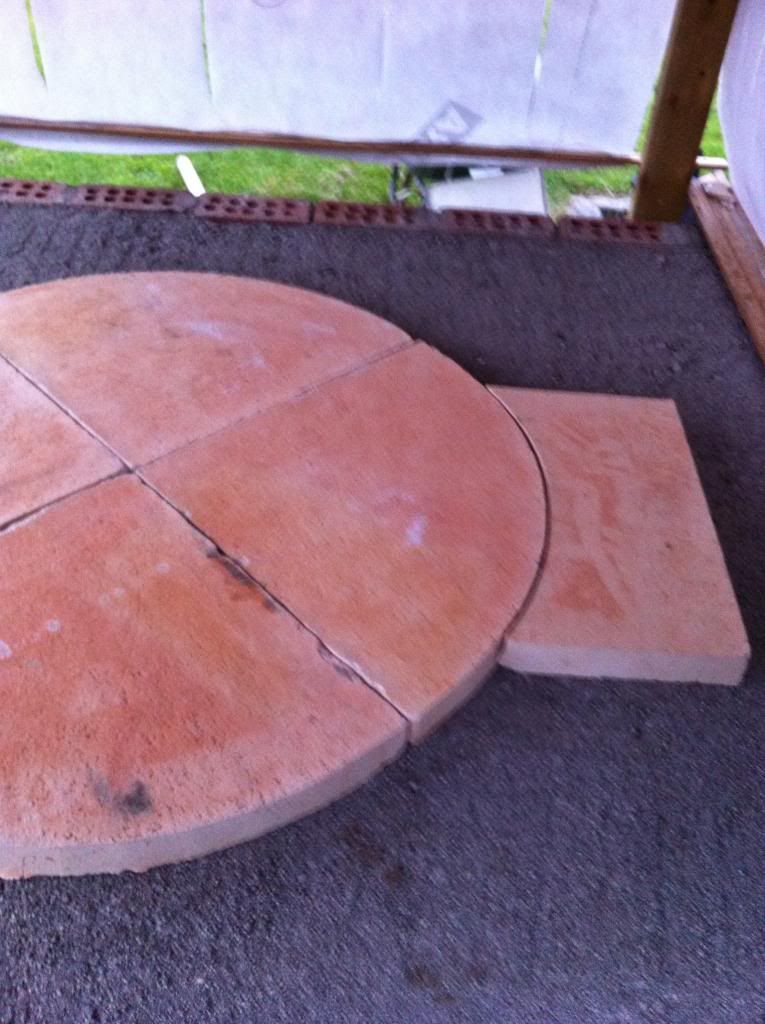 Last edited by RichC; 08-30-2013, 01:17 PM.
Leave a comment:
-
Re: Filling joints in hearth slab?
If you have your pericrete level at this point, don't screw around with trying to get a 5mm slope to anything. What is the idea of the slope in the first place? Once your oven dome is complete, you can adjust the height of the outer counters to match your hearth brick not vice versa.
but these are only my "opinion" on this particular subject. Wiser people may have other things to say on the subject. I would look at the effort involved first and what you expect to get in improvement. If there is only slight improvement leave it like it is and call it "Good"! then go on with the next step.
You will run into a lot of situations where you need to make a decision. Like any decisions in life, think it over but use your instinct as a guide. Usually human nature is pretty smart! Then just go for it! But remember--whatever decision you make is "yours and yours alone" for us who give advice--it is really cheap. Accept it knowing the cost of it!Leave a comment:
-
Re: Filling joints in hearth slab?
Thanks Mikku, mines going in on top of vermicrete insulation which should be quite level. I think I might need to add a little more as I want a reasonable slope from the cooking surface down to the outer edge of the finished external countertop. At the moment I'd say its a few mm to low, I probably need to add about 5mm to the vermicrete underhearth insulation.Originally posted by mikku View Post
I think I have all the info I need now to proceed, thanks to the contributors here!Leave a comment:
-
Re: Filling joints in hearth slab?
So what do you if you build your own modular oven? Make up your own instructions?
You follow the advice of some of the contributors who just told you all that you need to know. You can build modular either on top of your hearth tiles OR with the tiles inside the oven that do not actually touch the surfaces of the modular dome pieces.
In both cases, the hearth tiles are set loose--not bonded to anything. They are laid on top of either a pericrete insulation base or in your case the thermal mat. In your case, there should be no need for additional leveling. If set on top of pericrete; some additional leveling may be required to get a smooth working surface--but nothing that will bond any of the pieces.
If you are setting the modular pieces on top of the prepared hearth tile base, then put some newspaper on top of the hearth base (or paper baking sheet); then set-up your modular dome. The newspaper or baking paper guarantee that no mortar will come in contact between the dome and the base. You want this to be a slip joint! Then continue with your assembly. The mortar that was provided is probably a trowel grade refractory cement that can be generously slathered over the joints of the modular units..no need to place it anywhere else on the dome pieces. It will crack anyway when heat starts working on the completed dome. It is meant to fill any larger voids that have occurred due to poor alignment or poor manufacture. Do not mortar anywhere else! You always want these two surfaces to be free to move independently.
If you are building with the dome surrounding the hearth pieces, it might be a good idea to cover the hearth with paper and possibly use tape to keep the paper flat. Whatever you use will eventually burn away anyway. The paper can extend beyond the base where the modular pieces are to be set. If you are setting on pericrete or insulating mat same applies. You do not want any mortar used to assemble the pieces to come in contact with the hearth. Make sure that no mortar falls into whatever crack you have between the hearth and dome. If it does get in there, remove as much as you can while you still have access. You want to maintain the separation. Then same as above, slather your seams and you are golden.
My oven is modular; formed and cast myself; sets on top of the oven hearth. I anchored my entire dome to my structural base with the pericrete insulation only. So far--so good, but mine is only a three piece modular and fired only maybe 20 times.
Good luck with your build- and listen to people like Davids, MrChipster, Stonecutter, Tscarborough, Faith in Virginia, Laurenteus, Brickie in Oz and others too many to mention. they have their s--t together, all in one bag and know their stuff!
Leave a comment:


Leave a comment: